Microplastic Degradation Using Microbial Consortium
The textile industry is one of the primary sources of generating and
releasing microplastics into the environment, affecting oceans, land, and
even penetrating the human food chain. Currently, microplastics in
wastewater are collected using membrane filters through physical means but
require incineration for disposal. Addressing this issue, The Hong Kong
Research Institute of Textiles and Apparel (HKRITA) has developed
a biological method to degrade microplastics in textile mills.
Our research team discovered that a naturally occurring microbial
consortium has a strong biodegradation capability with regard to
microplastics. The morphology of microplastics presented significant
changes after several weeks of exposure to the microbial consortium. Based
on this observation, the team developed a method to biologically degrade
common synthetic fibres such as polyester, acrylic and nylon using the
cultivated microbial consortium seed. By utilising DNA mapping to identify
the various microbial species and their biological characteristics, this
research team also determines optimal conditions such as pH, humidity,
nutrient and oxygen levels that facilitate microbial consortium survival
and enhancement, thus enabling application in various environments. A
number of trials were carried out to cultivate the desired microbial
consortium under controlled and uncontrolled conditions, verifying its
breakdown performance. Results show that no microplastic fibres can be
found in the microbial consortium over a period of 48 to 53 weeks.
This innovative method of biodegrading microplastics does not require
burdensome infrastructure investment, making it feasible for application
in textile mills, landfills or other daily environments. It provides a
sustainable and cost-effective solution for microplastic management by
simply adjusting the microbial consortium to suit the environment,
optimising removal efficiency.
This technology was recognised with a Bronze Medal at the 2023
International Exhibition of Inventions of Geneva, demonstrating its
potential and practical value.
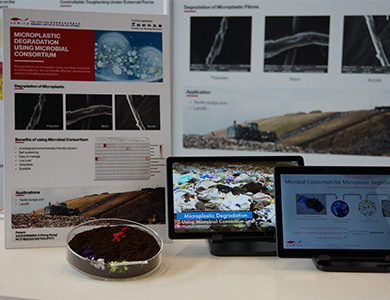
This project was showcased in the International Exhibition of
Inventions of Geneva
Project video